
Skoala is an educational platform focused on developing financial literacy among primary school students in the Czech Republic. The program is suitable for students in grades 6–9, aged 11–15, but its content and activities can also be adapted for younger students in grades 1–5. Its goal is to equip students with the knowledge and skills necessary for responsible money management, understanding financial concepts, and making informed economic decisions. Skoala combines theoretical instruction with interactive exercises, practical tasks, and digital resources, allowing students to apply learned principles in everyday life. The program aims to foster financial awareness, critical thinking, ethical decision-making, and responsible behavior in financial matters.
Key Activities and Student Experience
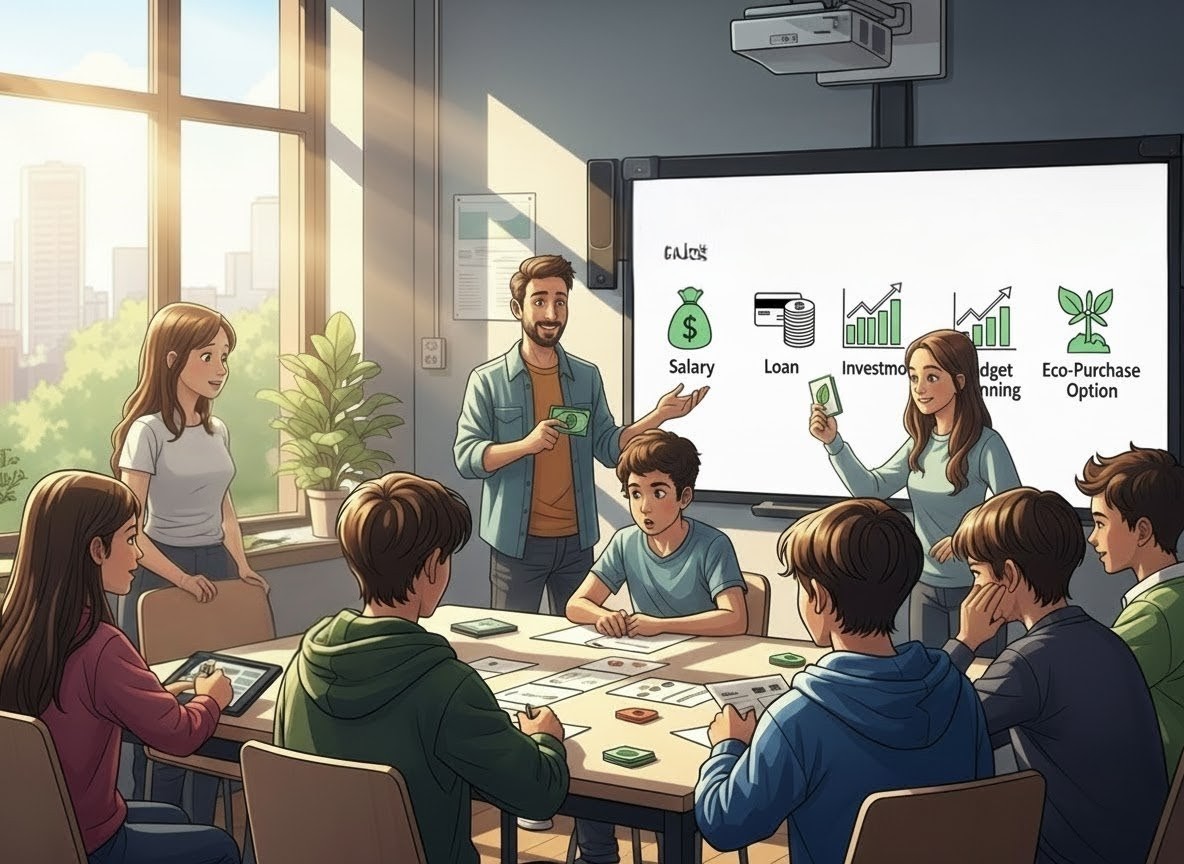
Students engage with a variety of interactive materials, including educational games, quizzes, simulations, and videos that clearly illustrate key financial concepts. Practical tasks include creating simple budgets, planning personal or classroom expenses, and solving situations based on real-life financial decisions. For example, the “Marketingové kejkle” module allows students to analyze advertisements, identify persuasive strategies, and evaluate marketing practices, which develops critical evaluation skills. Other activities include team projects focused on saving, responsible spending, and price comparison to support informed decision-making. During these exercises, students develop problem-solving skills, teamwork, communication, and reflection on their financial decisions in a safe and structured environment.
Program Features and Principles
The Skoala program combines modern digital tools with active learning approaches that encourage independent exploration and practical application of knowledge. Teachers act more as facilitators than traditional instructors, guiding students to analyze situations, reflect on decisions, and connect theoretical concepts to real-life experiences. The program emphasizes ethical behavior, critical evaluation of financial information, and responsible decision-making. Its uniqueness lies in integrating interactive content with real-world examples, making learning relevant and impactful.
Methodology and Structure
Lessons are organized into modules that include theoretical introductions, practical exercises, group discussions, and reflection sessions. Activities range from interactive games and case studies to project-based tasks and simulations of real financial situations, allowing students to understand financial principles and apply them in practice. The program supports both individual work and collaborative group activities. Teachers have access to methodological materials, ready-to-use lessons, and guides, facilitating the integration of financial literacy into subjects such as Mathematics, Civic Education, Social Studies, and Practical Skills. The structure is flexible and can be adapted to the age and needs of students.
Expected Outcomes and Value
Skoala promotes the development of critical thinking, practical financial skills, responsible decision-making, and collaboration. Students learn to plan budgets, recognize manipulative advertising, evaluate financial and marketing information, and make informed choices. Educators receive comprehensive methodological support and materials, enabling the effective integration of financial literacy into school curricula. The program equips students with the knowledge and skills necessary to navigate the financial world responsibly and supports the development of an informed and ethical approach to money and media.